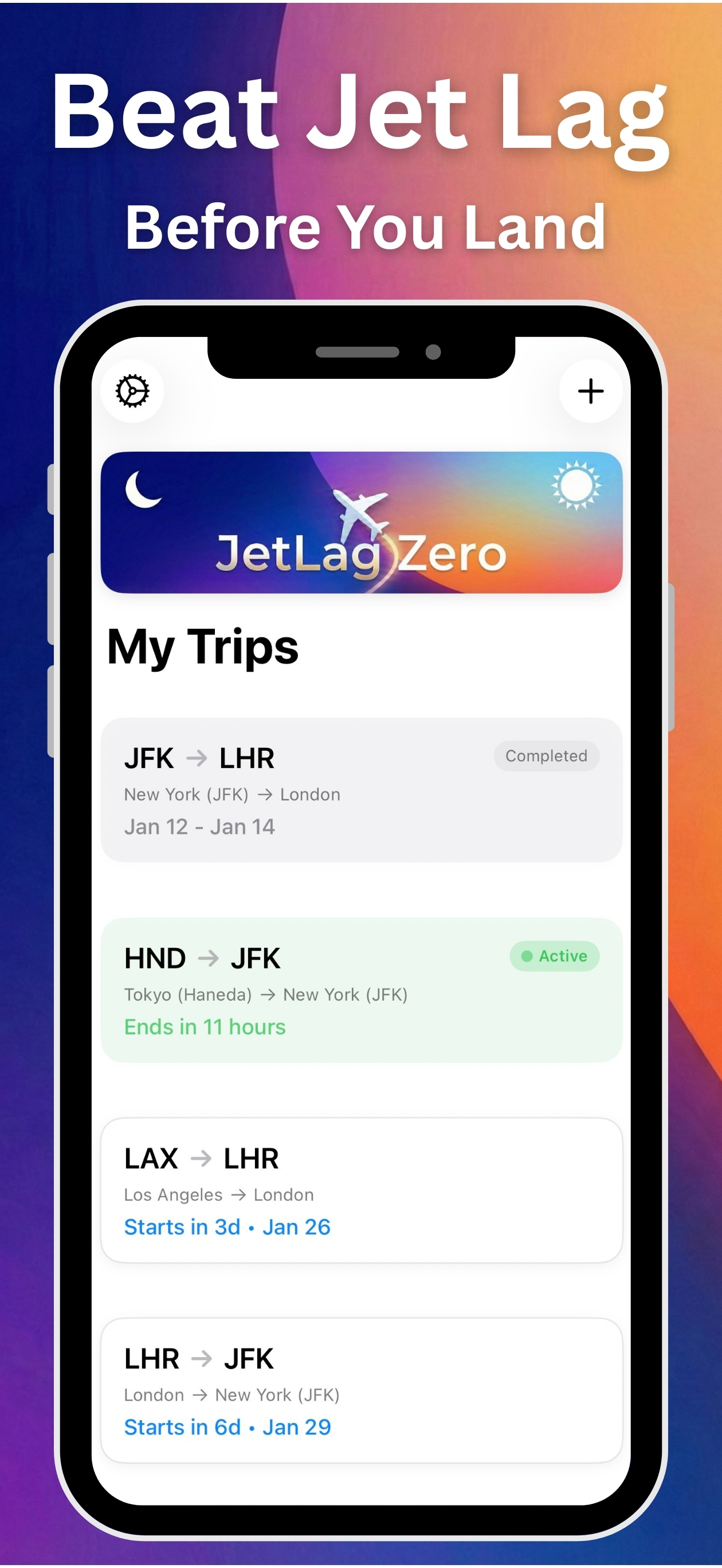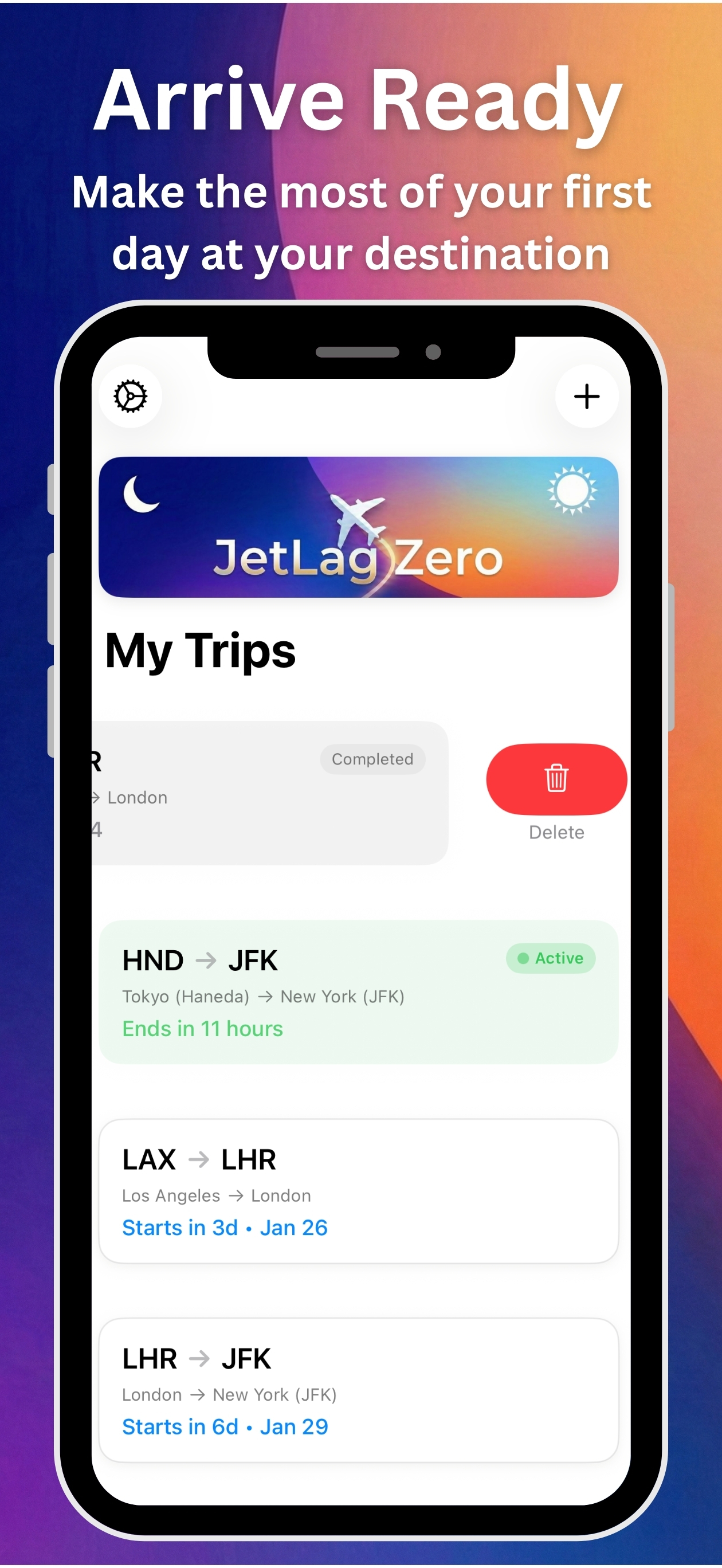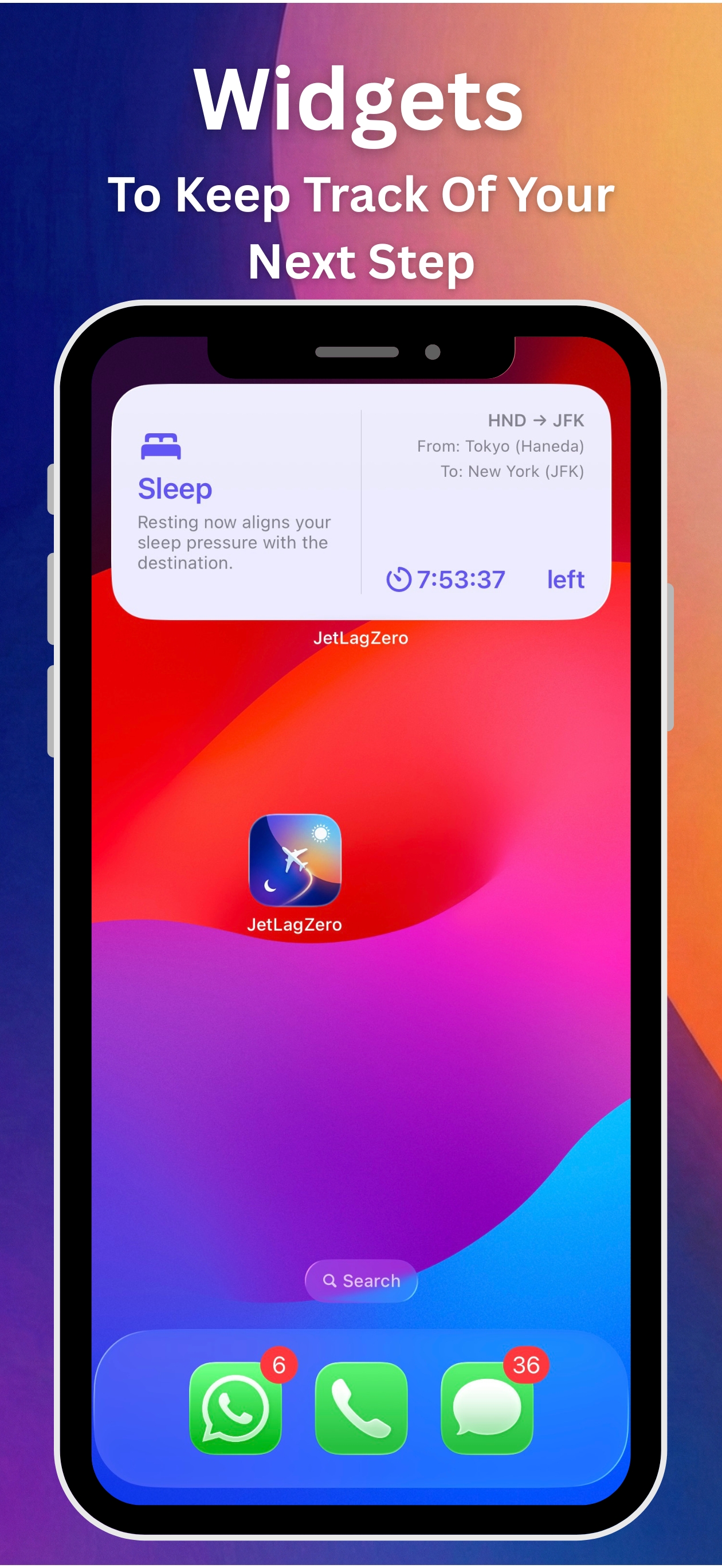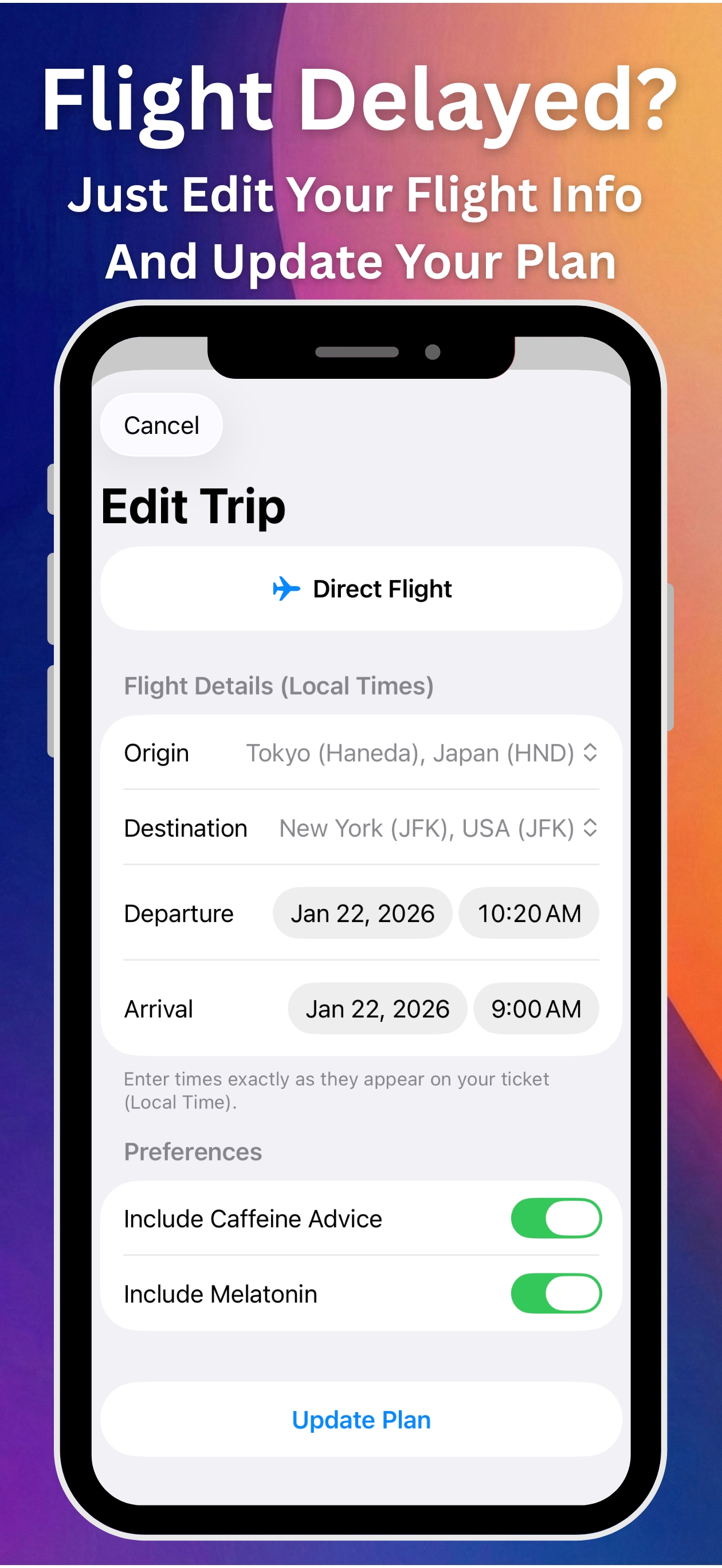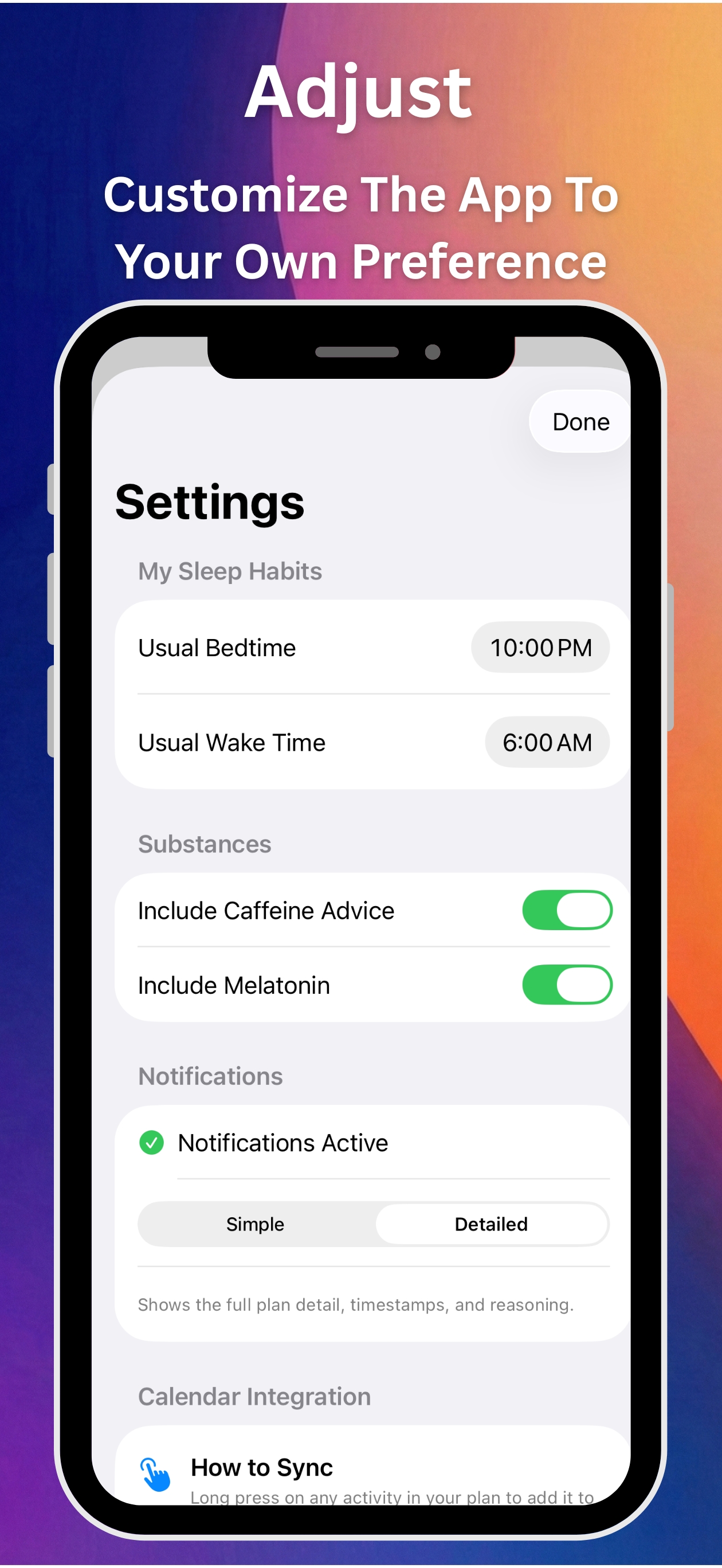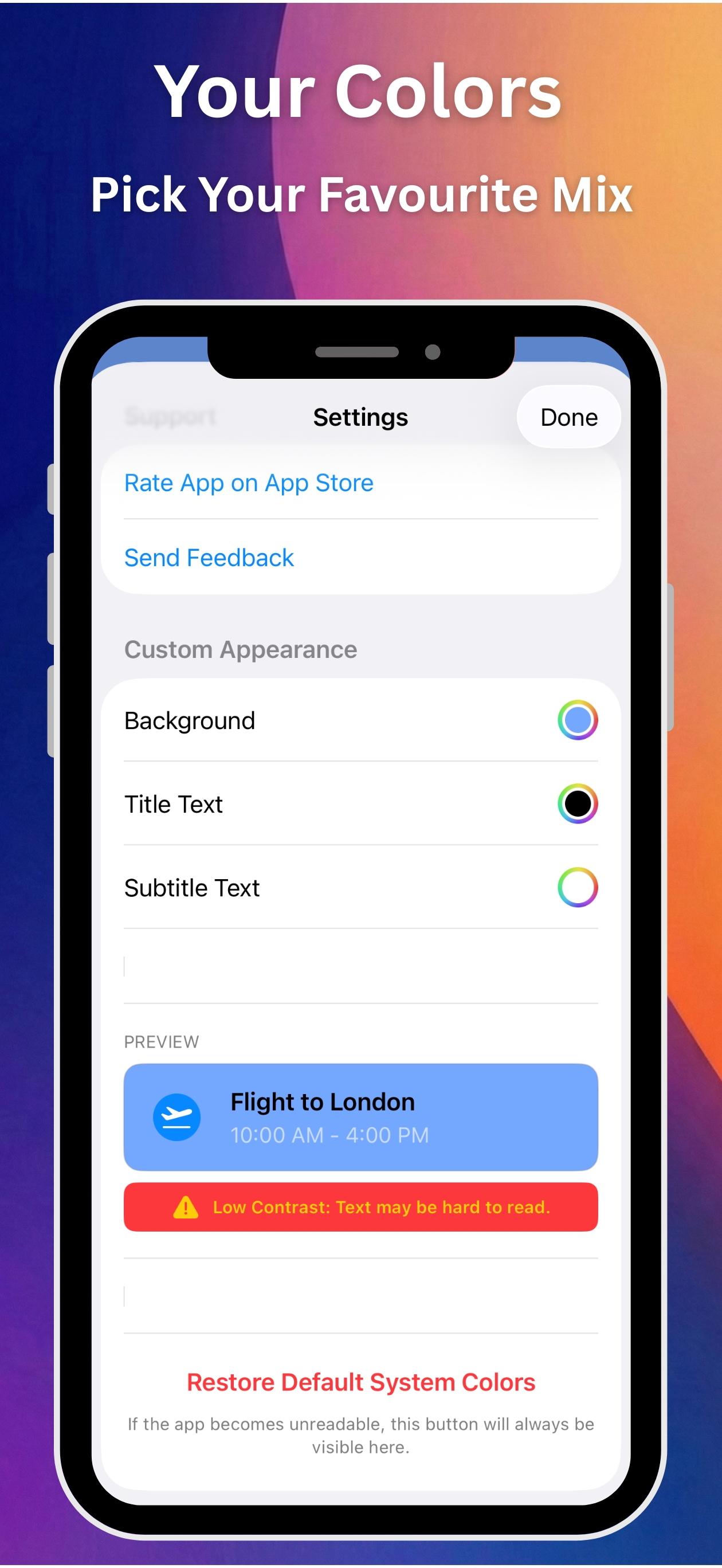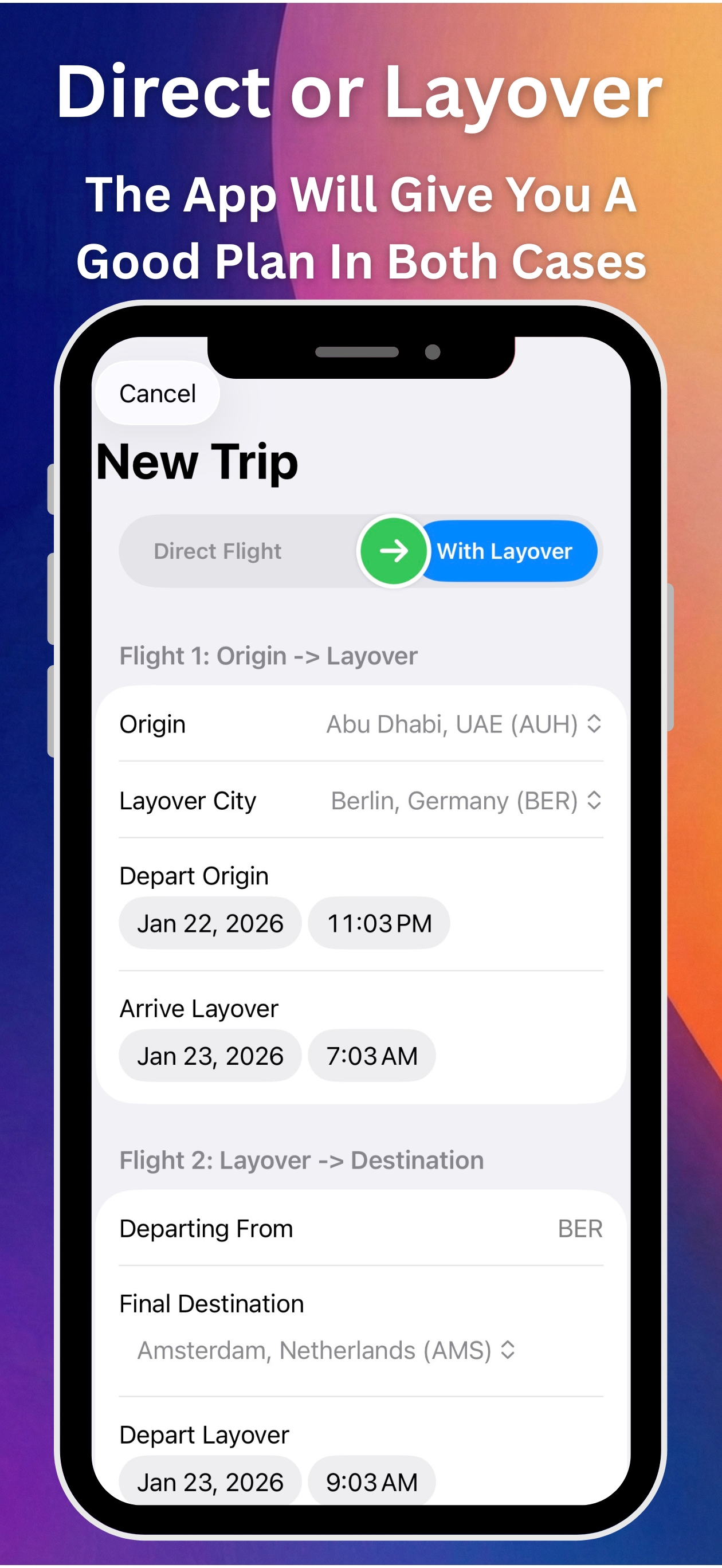
JetLagZero Banner - Circadian rhythm app to sync body clock with destination

Sync Your Body
With Your Destination

JetLagZero helps you to shift your circadian rhythm while you fly. Don’t just travel – arrive ready to perform and enjoy your first day.
JetLagZero App Icon - Best travel app to beat jet lag and travel fatigue Get the App
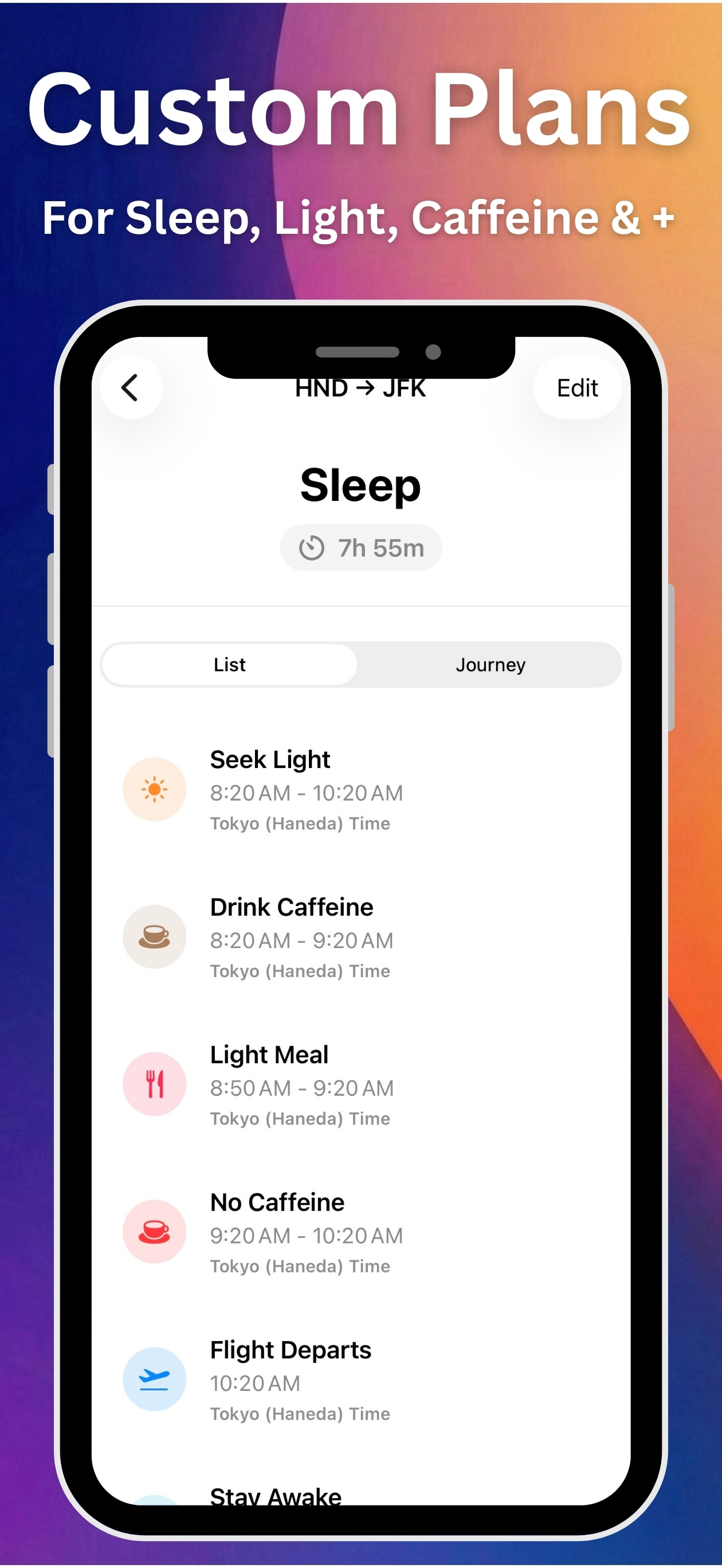
JetLagZero app interface showing custom flight plan and sleep schedule
Visual guide for light and dark therapy timing on long-haul flights
Caffeine cut-off and strategic intake reminders for travelers
Melatonin schedule and dosage timing for flight recovery
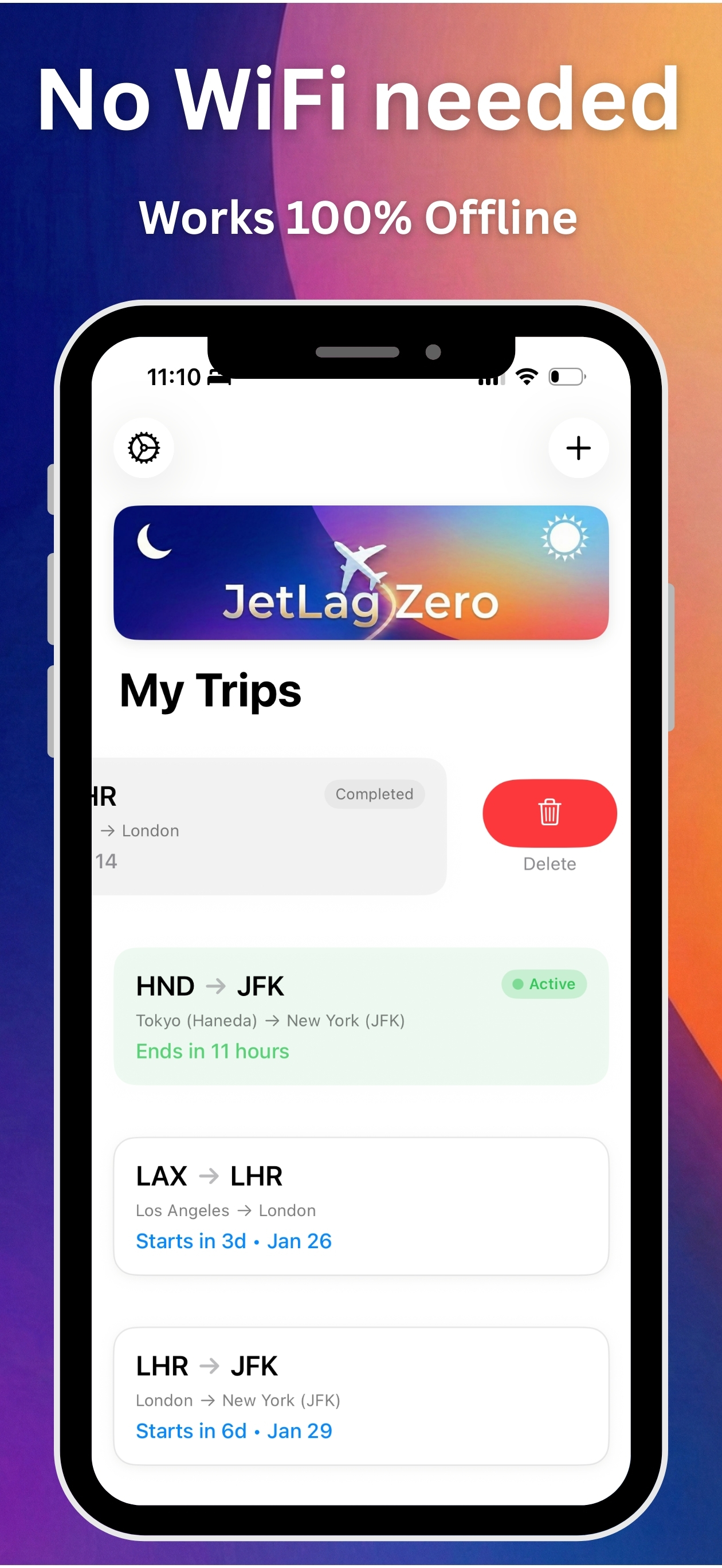
Offline mode travel app working without Wi-Fi in the air
Precision nap timer to manage sleep pressure during travel
JetLagZero app custom flight plan and sleep schedule
JetLagZero helps you to shift your circadian rhythm while you fly
Don’t just travel – arrive ready to perform and enjoy your first day
Jet lag app - Circadian rhythm travel - Beat jet lag - Flight sleep schedule

What is Jet Lag?

Jet lag is a physiological condition that results from a disruption in your body’s circadian rhythms. It occurs when you travel rapidly across time zones, causing your internal body clock to be out of sync with the destination’s time. This leads to fatigue, insomnia, and difficulty concentrating.

Can I reduce or avoid Jet Lag?

Absolutely. While you cannot change the flight time, you can scientifically prepare your body for it. By strategically timing your exposure to light, sleep, and caffeine before and during your flight, you can “shift” your internal clock to match your destination before you even land. JetLagZero creates this precise plan for you.

The Destination-Shift Protocol

Most travelers try to adapt after they land. JetLagZero calculates the perfect in-flight window to shift your internal clock and also, gives you a guide pre and post flight.

Smart Flight Parsing

Input your flight information. We handle the complex time-zone math for multi-leg journeys automatically.

💡

Light & Dark Therapy

Know exactly when to seek light and when to wear a mask. Light exposure is the #1 signal your brain uses to reset its clock.

Caffeine Strategy

Strategic intake and cut-off times. Use caffeine as a precision tool to stay awake during critical phases, not just a habit.

zz²

Precision Naps

Calculated sleep windows and “Stay Awake” zones designed to align your sleep pressure with your arrival time.

💊

Melatonin Schedule

Exact timing for melatonin intake to chemically signal your brain that it’s time to sleep, fast-tracking the shift.

💧

Hydration Tracking

Dry cabin air increases fatigue. Receive timely reminders to hydrate, keeping your body primed for adjustment.

🌐

100% Offline Mode

No Wi-Fi? No problem. Once your flight is loaded, the entire protocol works offline while you are in the air.

🔔

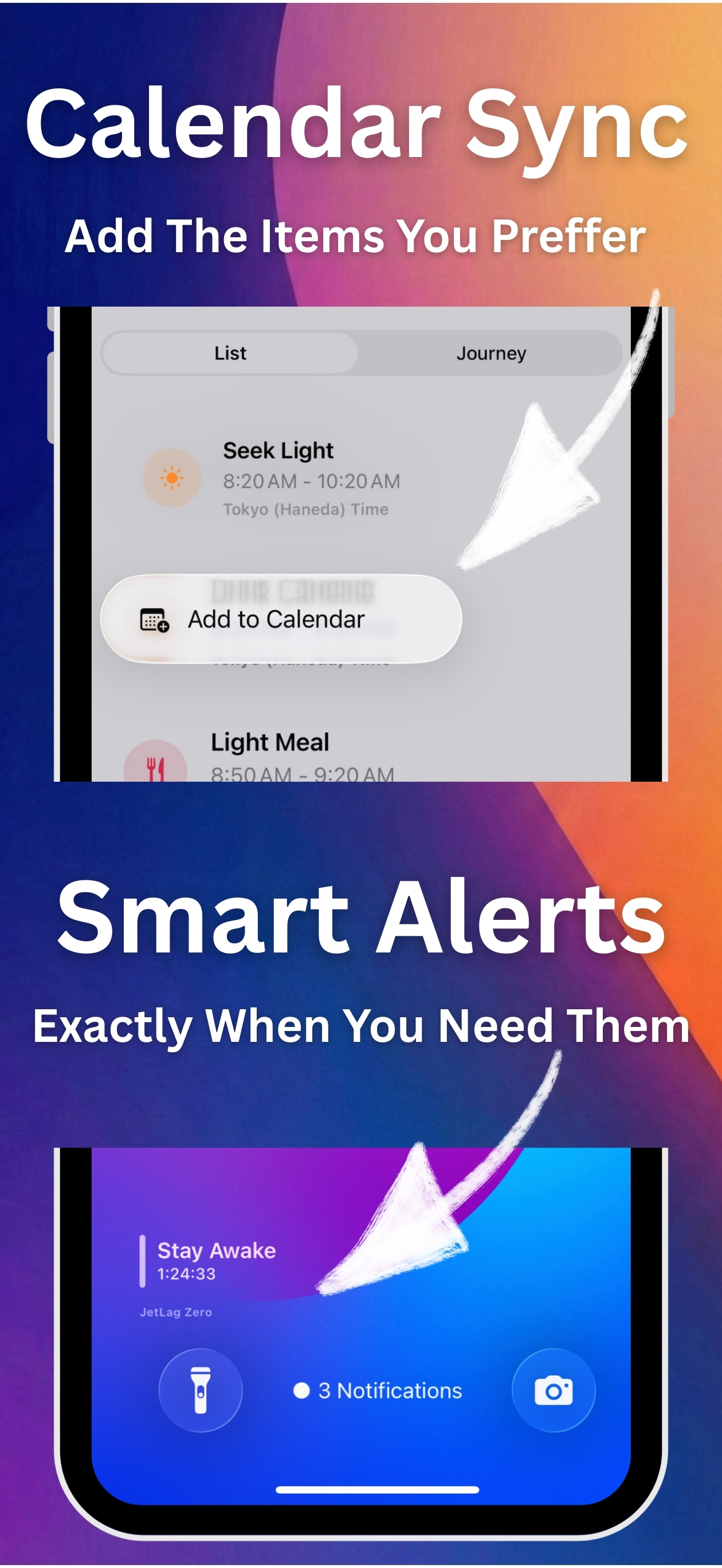
Push Notifications

Don’t watch the clock. We send you notifications exactly when you need to change your behavior.

📅

Add to Calendar

Export the items you choose from your custom schedule directly to your personal calendar so you never miss a step.

Your Flight Plan

Stage 1: Pre-Departure

Small adjustments to your sleep schedule 24 hours before you fly to “prime” your body for the shift.

Stage 2: In-Flight

The core shift. Follow the custom schedule: Sleep, Wake, Hydrate, and Melatonin cues synced to your destination.

Stage 3: Arrival

Immediate integration. Specific advice on when to see first light and your first meal to lock in the new time zone.

Ready to Fly?


Get the App

Light therapy for travel - Caffeine timing calculator - Melatonin schedule for flying - Offline travel wellness app Avoid travel fatigue - Shift body clock fast - Long-haul flight recovery

FREQUENTLY ASKED QUESTIONS – FAQ

Medical Disclaimer: JetLagZero provides general wellness guidance. It is not medical advice. Always consult your doctor before following any sleep or supplement protocols, especially if pregnant or managing a condition.


Understanding Jet Lag

1) What is jet lag?
Jet lag (medically known as desynchronosis) is a temporary biological mismatch. Your internal body clock (circadian rhythm) is still synced to home time, while the sun and social schedule are on destination time. Your body is essentially “living in the past” (or future).
2) What does jet lag feel like?
It’s more than just being tired. Common symptoms include:
• Sleep Disruption: Waking up wide awake at 3 AM or crashing at 2 PM.
• Brain Fog: Difficulty focusing, memory lapses, or feeling “slow.”
• Mood Changes: Irritability, anxiety, or feeling “off.”
• Physical Issues: Headaches, nausea, digestive issues, or appetite loss.
3) What causes jet lag?
The main cause is rapid travel across time zones—faster than your circadian rhythm can adjust. Light is the strongest signal your brain uses to reset its clock. When your light exposure doesn’t match your internal time, your hormones (like cortisol and melatonin) release at the wrong moments.
4) How many time zones do I need to cross to feel it?
Most people feel jet lag after crossing 2 or more time zones. Some sensitive travelers feel it after just 1 hour, while others may not notice significant symptoms until 4-6 hours of difference.
5) Is jet lag a medical condition?
It is recognized clinically as a Circadian Rhythm Sleep-Wake Disorder, but for most travelers, it is a temporary physiological condition rather than a disease. However, frequent long-haul travel without recovery can lead to long-term sleep issues.
6) Is jet lag different from “Travel Fatigue”?
Yes. Travel Fatigue is exhaustion from the act of travel itself (dehydration, cramped seats, stress). A good night’s sleep usually fixes it. Jet Lag is a timing issue; you can sleep 8 hours and still feel terrible because your internal clock is out of sync.


Timing & Recovery

7) How long does jet lag last?
The general rule is one day for every time zone crossed. However, with a strategic plan like JetLagZero, you can significantly shorten this recovery time by timing your light exposure correctly.
8) Why is flying East harder than flying West?
“West is best, East is a beast.” Flying West requires delaying your sleep (staying up late), which is easier for most people. Flying East requires advancing your sleep (going to bed earlier), which your body naturally resists.
9) Why do I feel worse on Day 2?
The “Day 2 Crash” is common. On arrival day, you are often powered by adrenaline and travel excitement. By Day 2, the adrenaline fades, and the full weight of the circadian mismatch hits. This is why following the plan for the first 48-72 hours is critical.
10) What is the fastest way to beat jet lag?
The fastest method is Strategic Light Management. Seek Light when your body needs to shift forward. Avoid Light (darkness/sunglasses) when your body needs to wind down. Combining this with timed caffeine and sleep is the gold standard for recovery.
11) What are the “3 Big Levers” if I’m busy?
If you can’t follow the full plan perfectly, prioritize these three:
1. Light Timing: Seek and avoid light exactly when the app says.
2. Caffeine Cutoff: Stop coffee 8 hours before your destination bedtime.
3. Nap Limits: Never nap longer than 20 minutes.
12) Should I start adjusting before my flight?
If your schedule allows, yes. Even shifting your sleep by 30-60 minutes for 2 days before departure can reduce the “shock” of arrival. If you can’t, don’t worry—JetLagZero focuses heavily on rapid adaptation after you land.


Sleep, Naps & The Plane

13) Should I sleep on the plane?
It depends on your destination. The Golden Rule: Act like you are already there.
• If it is night at your destination: Sleep (or rest with eyes closed).
• If it is day at your destination: Stay awake, even if you are tired.
14) I can’t sleep on planes at all—what should I do?
Don’t panic. Resting with your eyes closed still provides recovery. Use an eye mask and noise-canceling headphones. Even if you don’t sleep, keeping your environment dark during “destination night” is crucial for your clock.
15) Is it okay to nap right after I arrive?
Only if you are desperate. If you arrive in the morning and must sleep, take a Power Nap (15-20 mins). Do not sleep for 2-3 hours, or you will steal “sleep pressure” from your first night and prolong your jet lag.
16) What if I wake up at 3 AM every night?
This is the classic “home time” wake-up. Do not turn on bright lights or look at your phone. Keep the room pitch black. Treat it as a “rest period” until your wake-up time. Use your morning light window aggressively the next day to push your clock forward.
17) What is “The Wall” (3 PM Crash)?
This is when your home clock thinks it’s bedtime. To beat it:
• Go outside immediately (sunlight is key).
• Move your body (walk/stretch).
• Hydrate.
• Do not nap.


Light: The #1 Tool

18) Why is light so important?
Light is the primary signal that sets your brain’s master clock. It suppresses melatonin (the sleep hormone). Viewing light at the wrong time (like a bright screen at 2 AM) is the single biggest reason people stay jet-lagged.
19) How do I manage light in airports or planes?
To Avoid Light: Wear sunglasses (even indoors), use a hoodie, or wear an eye mask.
To Seek Light: Look at bright screens, airport lighting, or natural sunlight if available.
20) Do blue-light blocking glasses help?
Yes. They are excellent for “Light Avoidance” windows, especially if you cannot control your environment (like a brightly lit plane cabin during “destination night”).
21) Can I use a light therapy lamp?
Yes. While sunlight is best (10,000+ lux), a portable light therapy lamp is a great substitute if you arrive in winter or have to stay indoors during your “Seek Light” window.


Supplements & Caffeine

22) Does melatonin work for jet lag?
It can be effective, but timing is everything. Melatonin isn’t just a sleeping pill; it’s a “chronobiotic” (clock shifter). Taking it at the wrong time can actually shift your clock in the wrong direction.
23) Is melatonin safe?
It is generally considered safe for short-term use, but it is not for everyone. It can cause grogginess or interact with medications. Always consult a clinician before use, especially for children or if pregnant.
24) How much melatonin should I take?
Less is often more. JetLagZero treats melatonin as user-guided and optional. We recommend starting with the lowest effective dose. You do not need high doses to shift your clock.
25) Can I drive after taking melatonin?
No. Melatonin can cause drowsiness and delayed reaction times. Do not drive or operate machinery after taking it.
26) How does caffeine affect recovery?
Caffeine blocks “sleep pressure” signals in the brain.
Good: Use it to power through the morning/afternoon “crash.”
Bad: Using it within 8 hours of bedtime will ruin your deep sleep quality.
27) Does alcohol help me sleep on the plane?
We recommend avoiding it. Alcohol acts as a sedative initially but causes “rebound wakefulness” later, ruining sleep quality and increasing dehydration. It generally makes jet lag feel worse.
28) Does magnesium help?
Magnesium does not shift your body clock like light does, but it can support relaxation and muscle tension. It is a supportive tool, not a cure for jet lag.


Food, Hydration & Movement

29) Does jet lag cause stomach issues?
Yes. Your gut has its own circadian clock. Eating a heavy meal when your stomach thinks it is 3 AM can cause bloating, indigestion, and nausea.
30) What should I eat to help?
Timings: Try to eat meals according to destination time as soon as possible.
Content: Keep meals lighter on travel days. High-protein breakfasts can help alertness; complex carbs at dinner can help sleep.
31) Does hydration cure jet lag?
No, but dehydration mimics jet lag symptoms (headache, fatigue, fog). Staying hydrated removes those extra symptoms, making the actual jet lag easier to handle.
32) Does exercise help?
Yes. Light exercise (walking, stretching) signals “awake” to your body. Doing this outdoors combines movement with sunlight—a powerful combo for resetting your clock.


Special Travel Situations

33) What if my flight is delayed?
JetLagZero allows you to edit your arrival time manually. Simply update the plan with your new landing time, and the app will recalculate your light and sleep windows instantly.
34) How do I handle stopovers?
Short Stopover (<24 hrs): Try to stay aligned with your final destination time if possible.
Long Stopover (>24 hrs): Treat the stopover as a “mini-trip” and align to that local time to get restful sleep.
35) Should I adjust for short trips (1-2 days)?
Usually, no. For very short trips, it is often better to stay on your home time schedule to avoid shifting your clock back and forth rapidly (“yo-yo jet lag”).
36) What about the International Date Line?
Don’t worry about “losing” or “gaining” a calendar day. Your body only cares about the sun. JetLagZero calculates the math for you—just follow the light/dark schedule provided.
37) Can babies and kids get jet lag?
Yes. Children rely heavily on routine. The best strategy for kids is:
• Immediate exposure to morning light at the destination.
• Keeping meal and sleep routines consistent.
• Patience (they don’t understand why they feel weird).
38) Does jet lag affect mental health?
Circadian disruption is strongly linked to mood. It is normal to feel anxious or irritable. If you have a history of mood disorders, prioritize sleep protection and be gentle with yourself on Day 1.
39) Does jet lag get worse with age?
Unfortunately, yes. As we age, our circadian rhythms become less flexible and sleep becomes lighter. Older travelers should be stricter with light timing and caffeine cutoffs.
40) Does Business Class prevent jet lag?
It helps with Travel Fatigue (better sleep comfort), but it does not prevent Jet Lag. You still need to manage light exposure to reset your internal clock.
41) Do compression socks help?
They help with circulation and leg comfort (reducing fatigue), but they do not influence your body clock. They are a great “comfort tool,” but not a “timing tool.”
42) What if I can’t follow the plan perfectly?
Don’t stress. JetLagZero is designed for real life. If you miss a window, just jump back in at the next step. Even following 50% of the light advice is better than doing nothing.


About the JetLagZero App

43) How does the personalization work?
We use an algorithm based on chronobiology research. By combining your travel direction, time zones crossed, and personal sleep window, we generate a custom “prescription” for light and sleep.
44) Do I need to enter flight numbers?
No. You can enter your travel details manually (City A to City B, departure/arrival times). This gives you total flexibility if flights change or if you prefer not to track flight data.
45) Does it handle multi-leg trips?
Yes. You can add each leg of your journey to see the timeline of your entire trip, including layover advice.
46) Does JetLagZero work offline?
Yes. This is a core feature. Once your trip is created, the app works 100% offline. You can use it on the plane or in foreign countries without data roaming.
47) Does it send notifications?
Yes. You can enable notifications to get nudged exactly when to seek light, put on sunglasses, or start your wind-down routine.
48) What if I ignore the notifications?
The app is a guide, not a boss. If you miss a notification, simply check the “Now” dashboard to see the current best action.
49) What data do you collect? (Privacy)
Zero. We do not require an account, email, or login. Your trip data is stored locally on your device. We believe your travel patterns are your business.
50) Can I delete my data?
Yes. Since data is local, deleting a trip or the app instantly wipes that information from your device.
51) Is the app available in other languages?
JetLagZero is currently available in English, with support for Spanish coming in future updates.
52) Is the app accessible?
We designed JetLagZero with high-contrast text and large buttons to be easily readable even when you are tired and bleary-eyed in an airport.


Pricing & Transparency

53) How much does it cost?
JetLagZero is a one-time purchase. No monthly subscriptions, no annual fees. You buy it once, and you own it for life.
54) What is included in the purchase?
Everything. Unlimited trips, unlimited itinerary updates, widget support, and all future feature updates. There are no hidden “Pro” tiers.
55) Do I have to use melatonin?
No. The app includes a toggle to turn Melatonin advice ON or OFF. The core of the program works perfectly with just Light and Sleep timing.


Troubleshooting

56) I landed and I’m exhausted—should I sleep?
If it is daytime, try to push through until a reasonable local bedtime (e.g., 8 PM). If you absolutely must crash, limit it to 20 minutes to avoid waking up at midnight.
57) I’m wide awake at night—should I drink coffee?
No. Caffeine at night will only push your clock further away from alignment. Keep the lights low and try to rest, even if you can’t sleep.
58) I have a severe headache—is that jet lag?
It is likely dehydration mixed with fatigue. Drink water and rest. If the headache is severe or unusual, treat it as a medical issue, not just jet lag.
59) Is “Earthing” (Grounding) real?
While some travelers swear by walking barefoot on grass, the scientific benefit likely comes from being outdoors in sunlight and moving your body—both of which are proven to help jet lag.
60) When should I create my plan?
Ideally, enter your trip details 2-3 days before you fly. This gives you time to review the plan and prepare any necessary items (like eye masks or melatonin) before you leave.

Support & Contact

Need help with the app or have questions about the protocol?

Privacy Policy

Your data stays on your device.

JetLagZero is designed with a “privacy-first” architecture. We do not collect, store, or transmit your personal data, location, or flight details to any external servers.

1. Data Collection

JetLagZero does not collect, transmit, or store any personal identifiable information (PII) from its users. We do not have user accounts, and we do not track your usage of the app.

2. Flight & Schedule Data

All data you input regarding your flights and travel plans is processed locally on your device. The algorithms used to calculate your circadian shift schedule run entirely on your phone. No flight data is ever sent to a cloud server.

3. Health Data

JetLagZero does not currently integrate with Apple HealthKit or other health data repositories. The app relies solely on the inputs you provide manually (e.g., flight times) to generate recommendations.

4. Notifications

The app uses local notifications to alert you when to sleep, wake, or hydrate. These notifications are scheduled locally on your device and are not pushed from an external server.

The app uses local notifications to alert you when to sleep, wake, or hydrate. These notifications are scheduled locally on your device and are not pushed from an external server.

5. Third-Party Sharing

Since we do not collect data, we do not share or sell data to third parties, advertisers, or analytics providers.

6. Contact Us

If you have any questions about this Privacy Policy, please contact us at: info.digitalpartner.site@gmail.com